


Awarded
Cataloged
Disappeared
All works
-
Castell del Baró de Quadres
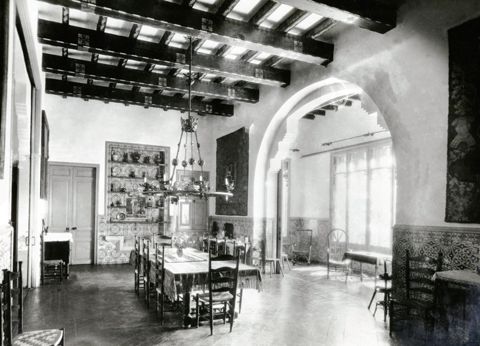 La Baronia Quadras està situada en un turonet a uns 2 km del nucli de Massanes, a la Partida dels Camins Creuers, entre el traçat del tren d'alta velocitat, la del tren convencional i la carretera GIV-5121. S'hi accedeix traspassant un reixat i per un camí flanquejat per arbres. Hi ha dos immobles la casa gran i la cabana. L'immoble principal és de planta quadrada i les estances s'organitzen al voltant del pati central. Té planta baixa, dos pisos i una torre quadrada i amb merlets a cada cantonada. Coberta en teula àrab. Tota la construcció és de carreus molt ben treballats. A la planta baixa, el portal és adovellat de mig punt, amb l'escut familiar a la clau; i les finestres són quadrangulars amb llinda, brancals i ampit de pedra. A la planta principal les finestres són geminades i trevolades, mentre que a les torres són d'arc conopial. A la planta superior hi ha una galeria, amb les finestres d'arc rebaixat separades per columnes. Des de l'entrada principal s'accedeix al pati, que va ser cobert posteriorment, i que es troba envoltat per una galeria. A l'interior, destaca el menjador, que rep la llum natural gràcies a una galeria amb vidrieres. Està decorat amb un arrambador de rajola, en el que hi ha un rentamans amb un Sant Jordi. Les vidrieres són presents en el conjunt de l'edifici. Destaquen les que hi ha a l'accés, les que donen de la sala-menjador al pati interior i a l'exterior i també les més petites de finestres més simples que donen al pati central. Cal esmentar les decoracions heràldiques pel conjunt de l'edifici. Hi ha escuts a totes les façanes. Les xemeneies, els arrambadors ceràmics, el gran Sant Jordi de la sala, els sostres amb bigues de fusta pintades i així com les làmpades són elements notables que vesteixen l'edifici. La cabana consta de planta baixa i pis amb coberta a dues aigües de teula àrab amb ràfec. La façana està arrebossada. S'accedeix a l'interior mitjançant una porta amb arc escarser. Al pis hi trobem un balcó amb arc de mig punt amb barana de fusta i dues finestres d'arc escarser a cada costat. A la part posterior hi ha una capella neogòtica dedicada al Sagrat Cor. De planta rectangular, i amb un absis pentagonal. El portal és de mig punt i dona al pati central del Mas de Quadras. Destaquen els vitralls que hi ha a les obertures ogivals de l'absis.
1900 - 1903