We use our own and third party cookies to offer you a better experience and service and, if applicable, show advertising related to preferences by analyzing your browsing habits. By clicking "OK", you agree to the use of these cookies. You can see the cookies policy
In this first stage, the catalogue focuses on the modern and contemporary architecture designed and built between 1832 –year of construction of the first industrial chimney in Barcelona that we establish as the beginning of modernity– until today.
The project is born to make the architecture more accessible both to professionals and to the citizens through a website that is going to be updated and extended. Contemporary works of greater general interest will be incorporated, always with a necessary historical perspective, while gradually adding works from our past, with the ambitious objective of understanding a greater documented period.
The collection feeds from multiple sources, mainly from the generosity of architectural and photographic studios, as well as the large amount of excellent historical and reference editorial projects, such as architectural guides, magazines, monographs and other publications. It also takes into consideration all the reference sources from the various branches and associated entities with the COAC and other collaborating entities related to the architectural and design fields, in its maximum spectrum.
Special mention should be made of the incorporation of vast documentation from the COAC Historical Archive which, thanks to its documental richness, provides a large amount of valuable –and in some cases unpublished– graphic documentation.
The rigour and criteria for selection of the works has been stablished by a Documental Commission, formed by the COAC’s Culture Spokesperson, the director of the COAC Historical Archive, the directors of the COAC Digital Archive, and professionals and other external experts from all the territorial sections that look after to offer a transversal view of the current and past architectural landscape around the territory.
The determination of this project is to become the largest digital collection about Catalan architecture; a key tool of exemplar information and documentation about architecture, which turns into a local and international referent, for the way to explain and show the architectural heritage of a territory.
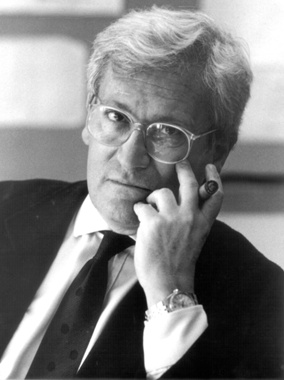
Aureli Mora i Omar Ornaque Directors arquitecturacatalana.cat
credits
About us
Project by:
Created by:
Directors:
2019-2026Aureli Mora i Omar Ornaque
Documental Commission:
2019-2026 Ramon FauraCarolina B. GarciaEduard CallísFrancesc RafatPau Albert Antoni López DaufíJoan FalguerasMercè BoschJaume FarrenyAnton PàmiesJuan Manuel ZaguirreJosep FerrandoGemma FerréInés de RiveraFernando MarzáMoisés PuenteAureli MoraOmar Ornaque
Collaborators:
2019-2026Lluis AndreuSergi BallesterMarianela PlaMaria Jesús QuinteroLucía M. VillodresMontse Viu
External Collaborators:
2019-2026Helena CepedaInès Martinel
With the support of:
Generalitat de Catalunya. Departament de Cultura
Collaborating Entities:
ArquinFAD
Fundació Mies van der Rohe
Fundación DOCOMOMO Ibérico
Basílica de la Sagrada Família
Museu del Disseny de Barcelona
Fomento
AMB
EINA Centre Universitari de Disseny i Art de Barcelona
We kindly invite you to help us improve the dissemination of Catalan architecture through this space. Here you can propose works and provide or amend information on authors, photographers and their work, along with adding comments. The Documentary Commission will analyze all data.
Please do only fill in the fields you deem necessary to add or amend the information.
The Arxiu Històric del Col·legi d'Arquitectes de Catalunya is one of the most important documentation centers in Europe, which houses the professional collections of more than 180 architects whose work is fundamental to understanding the history of Catalan architecture.
By filling this form, you can request digital copies of the documents for which the Arxiu Històric del Col·legi d'Arquitectes de Catalunya manages the exploitation of the author's rights, as well as those in the public domain.
Once the application has been made, the Arxiu Històric del Col·legi d'Arquitectes de Catalunya will send you an approximate budget, which varies in terms of each use and purpose.
The property will consist of four floors housing a total of three dwellings, with the following layout: Ground floor - Commercial premises, entrance hall to the property, providing access to the staircase and two rooms for rubbish collection, water and electricity meters. First floor - This consists of a dwelling that extends between the two façades and an upper floor with access to a terrace. Second floor - This complements the first floor, forming a single dwelling. Third floor and attic - These will be used for residential purposes. The concrete foundations support the metal pillars and solid brick walls. The floors will be ceramic, and the loads and characteristics of the load-bearing elements are outlined in the structure section. The façades will have stuccoed walls and will consist of a 15 cm thick exterior wall, a 10 cm air chamber and a partition wall. The interior walls and ceilings will be plastered and painted with tempera. The bathrooms and kitchens will have tiled vertical walls. The flooring in the dwellings will be 30x30 terrazzo. The interior and exterior carpentry will be made of top-quality Flemish pine wood painted with enamel. The electrical installation will be fully protected by recessed Bergman tubing and the conduit sections will be as required. The plates, switches, sockets, etc. will be BJ brand ‘star type’ Bakelite and television plates. The risers will have the sections required by the supply company, as specified in a prior report. The water installation will be made of lead for indoor installations and will have the sections required for the flow rate. Iron pipes will be used for outdoor installations and risers. All these materials, as well as any others used in the work, will be of the highest quality and the construction methods used will be those traditionally used in this city.
Author: Oriol Bohigas i Guardiola, Josep Maria Martorell i Codina
The property will consist of four floors housing a total of three dwellings, with the following layout:
Ground floor - Commercial premises, entrance hall to the property, providing access to the staircase and two rooms for rubbish collection, water and electricity meters.
First floor - This consists of a dwelling that extends between the two façades and an upper floor with access to a terrace.
Second floor - This complements the first floor, forming a single dwelling.
Third floor and attic - These will be used for residential purposes.
The concrete foundations support the metal pillars and solid brick walls. The floors will be ceramic, and the loads and characteristics of the load-bearing elements are outlined in the structure section.
The façades will have stuccoed walls and will consist of a 15 cm thick exterior wall, a 10 cm air chamber and a partition wall. The interior walls and ceilings will be plastered and painted with tempera. The bathrooms and kitchens will have tiled vertical walls. The flooring in the dwellings will be 30x30 terrazzo. The interior and exterior carpentry will be made of top-quality Flemish pine wood painted with enamel. The electrical installation will be fully protected by recessed Bergman tubing and the conduit sections will be as required. The plates, switches, sockets, etc. will be BJ brand ‘star type’ Bakelite and television plates. The risers will have the sections required by the supply company, as specified in a prior report. The water installation will be made of lead for indoor installations and will have the sections required for the flow rate. Iron pipes will be used for outdoor installations and risers. All these materials, as well as any others used in the work, will be of the highest quality and the construction methods used will be those traditionally used in this city.
Ajuda’ns a millorar el web i el seu contingut. Proposa’ns obres, aporta o esmena informació sobre obres, autors i fotògrafs, o comenta’ns el què penses.
Participa!