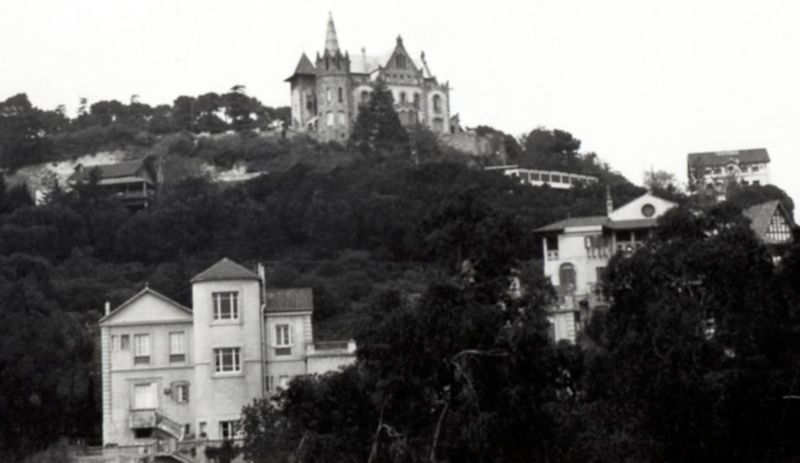
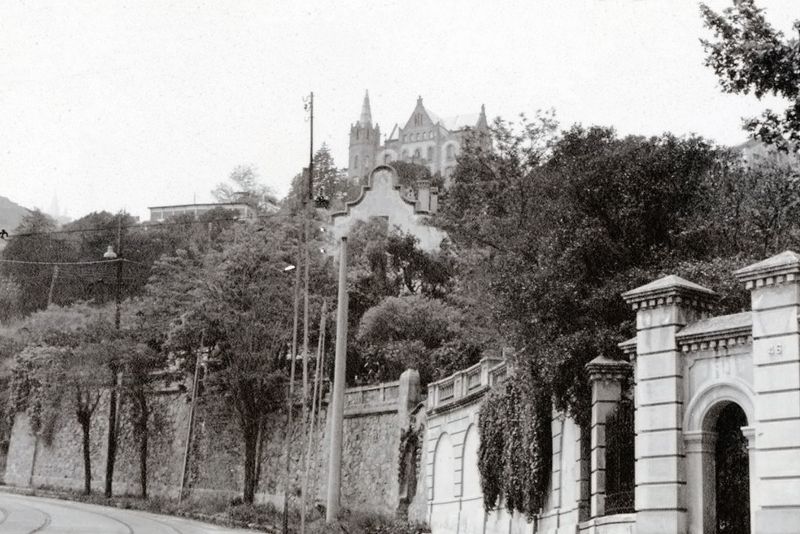
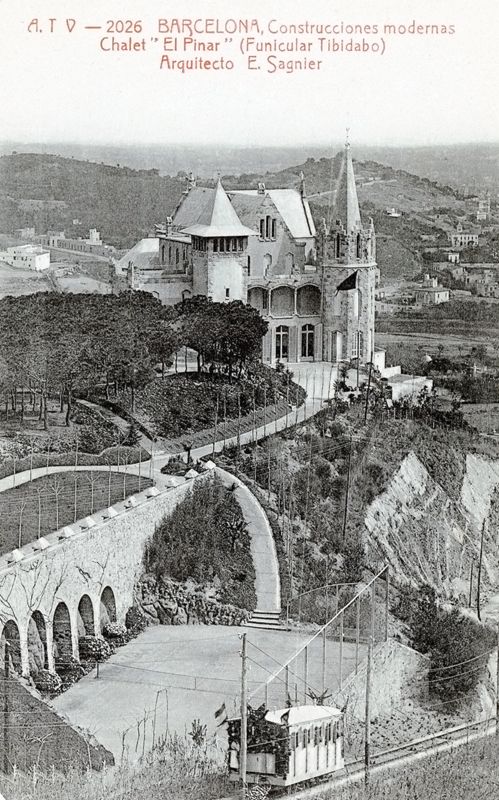
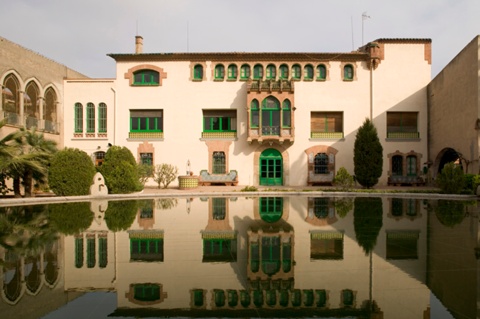
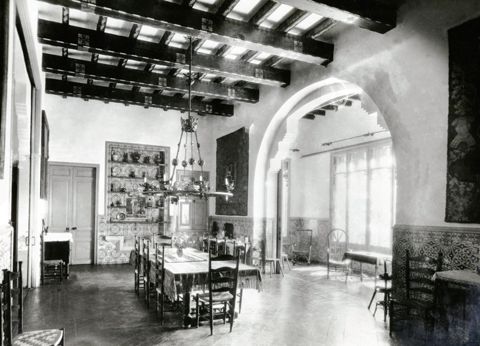
The construction of detached single-family houses, both in urban settings and in holiday areas —what in Barcelona parlance are known as ‘torres’— occupied Sagnier throughout his life. Unfortunately, some of the finest examples did not withstand the pressures of property speculation and have disappeared. This only serves to underline the importance of this outstanding ensemble, located on the slopes of Mount Tibidabo and clearly visible from much of the city.
The El Pinar estate, set in an enviable location, takes its name from a small pine grove that was preserved when the banker Manuel Arnús’s summer residence was built, together with the neighbouring coach house and the porters’ dwelling. Constructed of fine Montjuïc stone, complemented by sgraffito work and brick, the tower stands out on a prominent site exposed to all four winds. The complex displays a rich volumetric composition with markedly picturesque profiles; the appearance of the towers and the trilobed openings lend it a vaguely medieval character, while the gallery refers to the tradition of Catalan ‘masies’ or rural houses. The stone ornamentation reveals the naturalistic repertoire that Sagnier was using at the time in the nearby Tibidabo temple, with finials that evoke petrified formations or star-shaped timber.
The interiors of the building benefited from the collaboration of some of the artisans and industrial designers most frequently involved in Sagnier’s works, including Carles Torrebadell for wrought iron, Antoni Rigalt for stained glass, Pujol & Bausis for ceramics, and Joan Pujol for sculptural work; the furniture is attributed to Joan Busquets.