












-
Bonaplata Textile Mill
autoria desconeguda
 Josep Bonaplata and Silvestre Puig founded the company "Bonaplata i Cia" in 1829, specialising in the manufacture of yarns, fabrics and colour prints. In 1831 it was renamed "Bonaplata, Vilaregut, Rull i Cia."; originally located in a pre-existing building on 52 Tallers Street (owned by Francesc Guiu). Later, land was bought and sold by Francesc Guiu, Ramon Prats i Pi and an old industrial factory occupied by the Col·legi de Sant Vicenç Ferrer. At that time, renovation and extension works were carried out under the direction of the master builder: Domènec Vidal. As a result of the first workers' riots, the factory under study was set on fire and destroyed.
1832
-
1833 - 1834
-
1834
-
1838
-
Xemeneia de la Fàbrica Puigmartí
autoria desconeguda
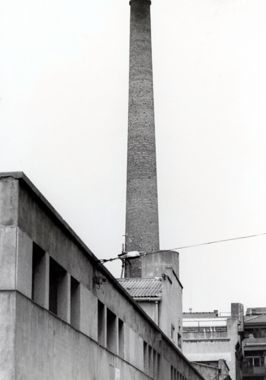 Xemeneia d'obra vista que constitueix l'únic testimoni de la potent zona industrial que es va desenvolupar en aquest sector del barri de Gràcia. Esdevé una referència visual destacada des dels carrers de Siracusa i Milà i Fontanals.
1839
-
Porxos de Vidal Quadras
 La composició, d’estil neoclàssic, incorpora porxos a la planta baixa, que defineixen la relació de l’edifici amb l’espai públic. La façana presenta una decoració basada en terra cuita i fosa de ferro, emprades tant com a elements ornamentals com estructurals.
 -
En Xifré Housing
Josep Buxareu i Gallart, Francesc Vila
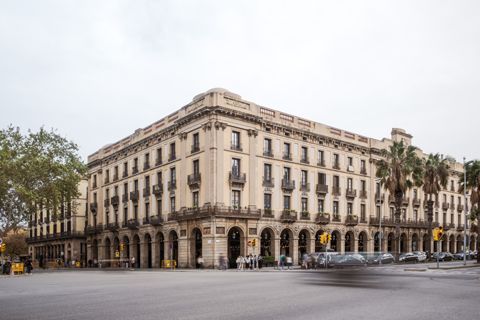 Es tracta d’un bloc format per cinc cases concebudes amb un tractament unitari. La composició respon als criteris del neoclassicisme i incorpora l’ús de porxos a la planta baixa. A la façana destaquen els elements decoratius de terracota i de ferro fos, utilitzats tant amb funció ornamental com estructural. L’edifici forma part d’un projecte més ampli d’ordenació urbanística de tot el sector.
1836 - 1840
-
1840
-
Pòrtic d'Accés al Cementiri Vell de Barcelona
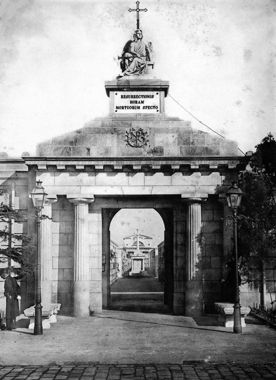 Element lineal i simètric compost per dos cossos principals destinats a l’administració i als serveis del cementiri. El conjunt actua com a separació entre la zona d’arribada i enjardinada, i l’espai pròpiament destinat als enterraments.
 -
1842 - 1844
-
1846
-
Casa Pau de Barnola i d'Espona
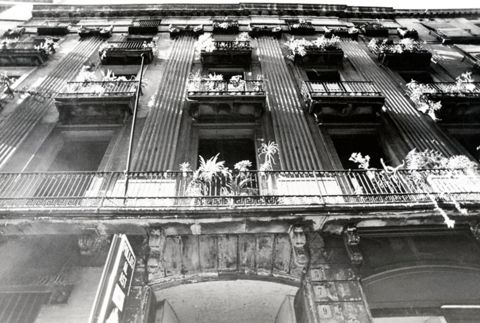 Edifici entre mitgeres de planta baixa i quatre plantes, estructurat al voltant d’un pati central accessible des del carrer, des del qual arrenca l’escala que comunica amb les plantes superiors. La planta presenta un esquema simètric que es reflecteix també en la façana, amb una composició vinculada a la dels edificis del perímetre de la plaça Reial. Les tres primeres plantes s’articulen mitjançant una composició d’ordre superior, amb columnes estriades coronades per grans capitells jònics que sostenen una cornisa destacada. Entre aquesta i la cornisa superior, rematada amb permòdols decorats, se situa la quarta planta. La unitat de les tres primeres plantes queda reforçada per un balcó corregut al pis principal, que emmarca inferiorment aquesta composició d’inspiració clàssica.
1847
-
Casa Xuriguer
Francesc Daniel Molina i Casamajor
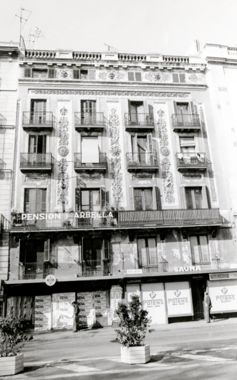 Edifici entre mitgeres de planta baixa i i cinc pisos, que destaca pels relleus i el fris superior de terracota amb motius al·legòrics al teatre. La façana presenta una marcada simetria vertical, que n’ordena la composició. A la segona planta hi sobresurt una balconada, mentre que una cornisa potent separa els pisos quart i cinquè. Finalment, una balustrada corona la part superior de l’edifici.
 -
Casa Joan Cabot
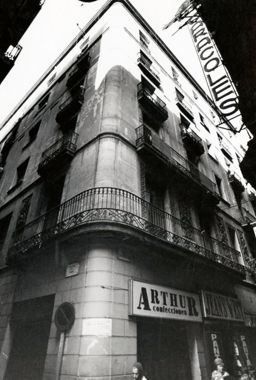 Edifici entre mitgeres de planta baixa, pis principal i quatre pisos superiors. Com a elements singulars cal destacar les decoracions de terracota, especialment situades als brancals i llindes dels balcons del pis principal, així com els medallons amb cares d’home i dona que ocupen els espais entre les obertures d’aquesta planta. Aquest mateix esquema decoratiu es repeteix a la façana del carrer del Vidre, tot i que sense la decoració específica dels entorns dels balcons.
 -
Casa Antoni Sala i Brugués
Francesc Daniel Molina i Casamajor
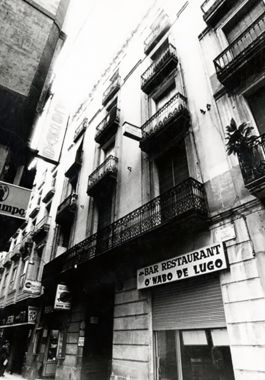 Edifici entre mitgeres de planta baixa i quatre plantes, amb una composició pròpia del segle XIX i una façana ordenada i regular. A la primera planta destaca una balconera correguda, mentre que a la resta de nivells hi ha tres balcons per pis que disminueixen progressivament cap amunt, generant un efecte de perspectiva. En aquest primer nivell s’hi desenvolupa un pas circumdant d’estil neoclàssic, resolt amb columnes de capitell motllurat, que aporta singularitat al conjunt. L’element més rellevant és el pati interior, de planta quadrada, amb una obertura per planta a cada façana. A la façana frontal del pati hi ha un tram d’escala que condueix a l’accés principal dels habitatges, amb quatre habitatges per replà. Les obertures del primer pis estan emmarcades per columnes rematades amb motllures, mentre que a la tercera planta les obertures són de llinda.
 -
1844 - 1848
-
Gran Teatre del Liceu
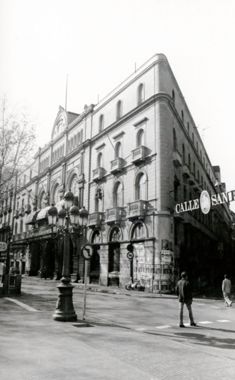 Edifici entre mitgeres fent cantonada, de planta baixa i quatre pisos, que presenta una façana neoclàssica definida per grans obertures en arc i una balconada amb balaustrada que reforça la monumentalitat del conjunt. Un pòrtic de tres arcades dóna accés a un vestíbul d’ordre grec dividit en tres naus, des d’on arrenca l’escala principal, de majestuós aspecte i íntegrament revestida de marbre. Al primer replà s’hi troba l’escultura "La Música", obra de Vallmitjana pare, situada en una fornícula entre dues làpides commemoratives. Al primer pis destaca el saló de fumar, decorat en estil neopompeià, propi del gust del Segon Imperi francès, amb estucats que imiten marbre i composicions de columnes corínties. La sala de concerts constitueix l’espai més emblemàtic de l’edifici, organitzada en planta baixa i cinc nivells, amb una rica decoració pictòrica obra de Martí Alsina, Vicens, Rigal i Caba. L’embocadura de l’escenari fa 14 metres d’amplada, mentre que la sala, amb una superfície de 1.117 m² i una alçada de 20,50 metres, destaca per les seves grans dimensions i per la solemnitat del seu espai interior.
 -
Santa Caterina Market
Josep Buxareu i Gallart, Josep Mas i Vila
 The Santa Caterina market’s site is the result of the superimposition of numerous historical strata dating from the Bronze Age, with a necropolis of which there are still some remains. The first market was built in the 19th century on the ruins of a monastic structure, and the last intervention aims to mend the structural and organisational deficits of the old market. The project is based on the overlap between the old and the new, from a conception of action that seeks to establish a continuity with this series of historical overlaps. The number of stops is reduced and power lines are created inside, creating new connections between the surrounding streets. The new roof overlaps the old perimeter factory and recovers its image from neighbouring houses, while being based on a structural principle of stable fragility.
 -
Restauració i Façana del Teatre Principal
Francesc Daniel Molina i Casamajor
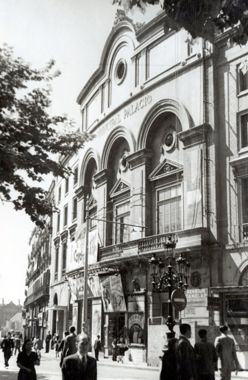 La façana es compon de tres arcades que arrenquen al primer pis, on s’obre una balconada de marbre. Tant al centre com als extrems s’hi disposen figures al·legòriques. El conjunt queda rematat per un frontó semicircular amb rellotge, baix relleus i plafons amb figures decoratives. L’edifici tenia un ús polivalent i incloïa botigues, un night club, cinema, cabaret, club d’escacs i billar, així com taquilles per a la venda d’entrades de braus.
1847 - 1848
-
Casa Pau Soler i Trenchs
Francesc Daniel Molina i Casamajor
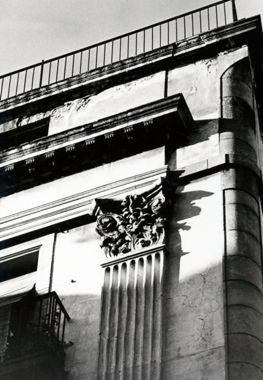 Composició inscrita dins l’estil de la Plaça Reial, amb una estructura de planta baixa, pis principal i dues plantes superiors, aquestes darreres articulades per un ordre nou format per columnes estriades amb capitells compostos que sostenen una cornisa elevada amb permòdols. A diferència del que és habitual, no hi ha una tercera planta per damunt d’aquesta cornisa, sinó que s’hi disposa directament una coberta a la catalana. Cal remarcar la complexitat dels enreixats dels balcons, així com la riquesa decorativa dels permòdols situats sota les llosanes.
1848
-
Casa Josep Gené
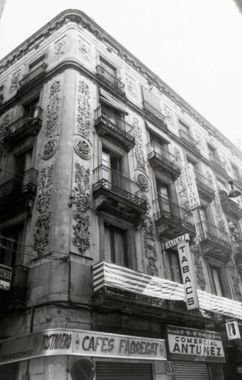 Edifici entre mitgeres en cantonada, de planta baixa i quatre plantes. La façana presenta un tractament acurat, amb obertures emmarcades per brancals i llindes de pedra. Es produeix una progressiva reducció dels balcons en alçada, amb baranes de ferro. La composició es completa amb una imposta que marca el forjat de l’última planta i una cornisa de coronament. Destaca la presència d’elements ornamentals verticals amb motius vegetals i medallons de terracota.
 -
Casa Baulés
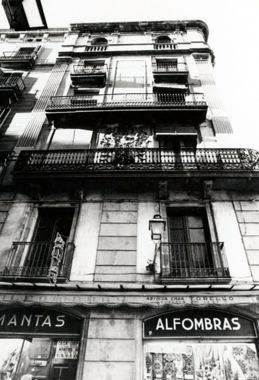 Aquest edifici típic del segle XIX destaca per la qualitat de la seva composició arquitectònica i per la riquesa decorativa de la façana. Consta de planta baixa, entresòl i quatre pisos, organitzats segons una composició classicista i equilibrada. La façana incorpora elements ornamentals característics de l’època, com la decoració de terracota al primer pis, columnes adossades, balustres a l’últim nivell i una cornisa de coronament que reforça l’elegància i unitat del conjunt.
Awarded
Cataloged
Disappeared
All works