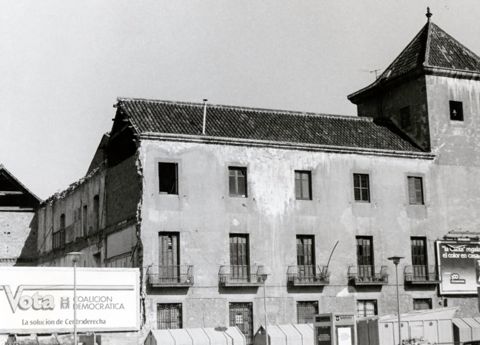
The Convent of Our Lady of Montsió was built by the Augustinians beside Plaça de Santa Anna, on the site now occupied by Avinguda del Portal de l’Àngel. The community, originally from the extramural canonry of Santa Eulàlia del Camp, had settled there in 1308, although the church itself was not constructed until 1388 under the direction of Friar Bernat Jaubert and/or Guillem Abiell. Through the mediation of Maria of Castile and Alfonso the Magnanimous, the Augustinians moved in 1423 to the canonry of Santa Anna, leaving the convent in the hands of the Dominican nuns. Following the ecclesiastical confiscations of 1835, the convent became the headquarters of the Liceo Filarmónico-Dramático Barcelonés until 1846, when the nuns recovered the monastery in an almost ruinous condition.
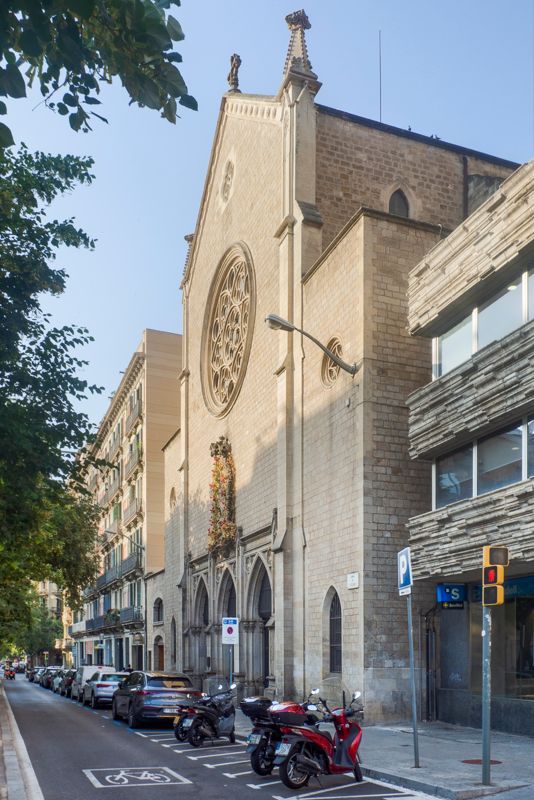
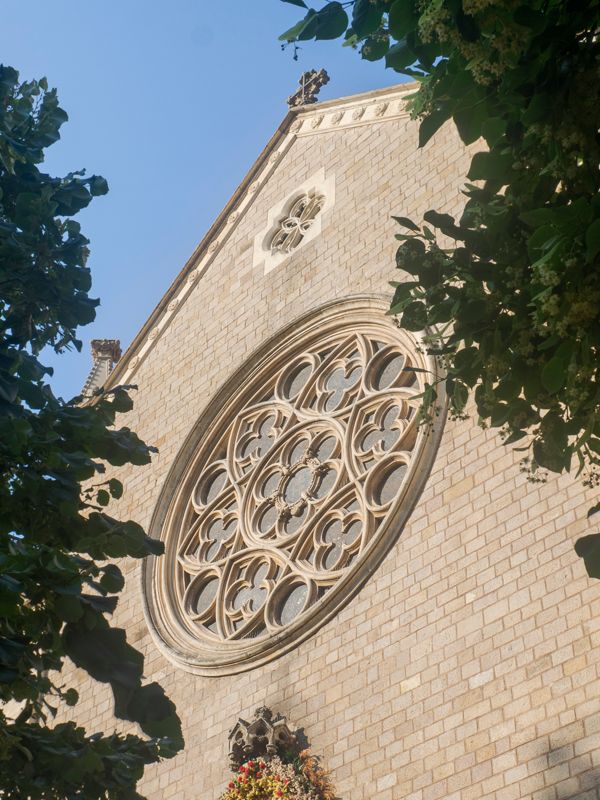
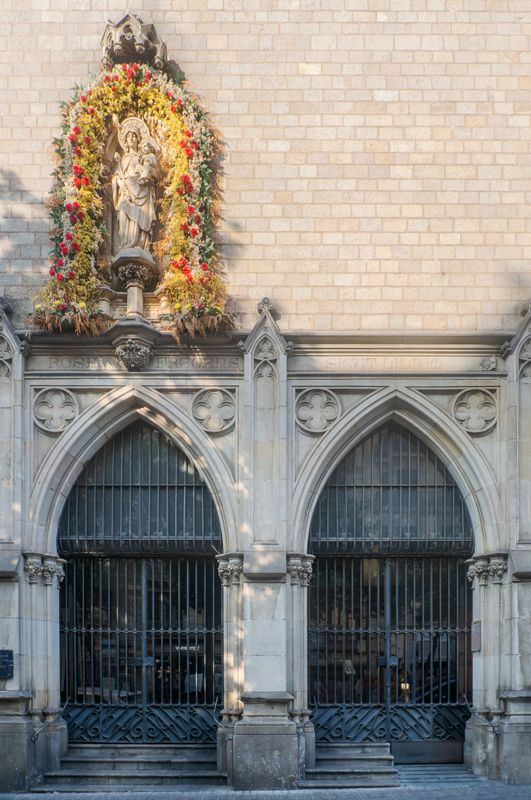
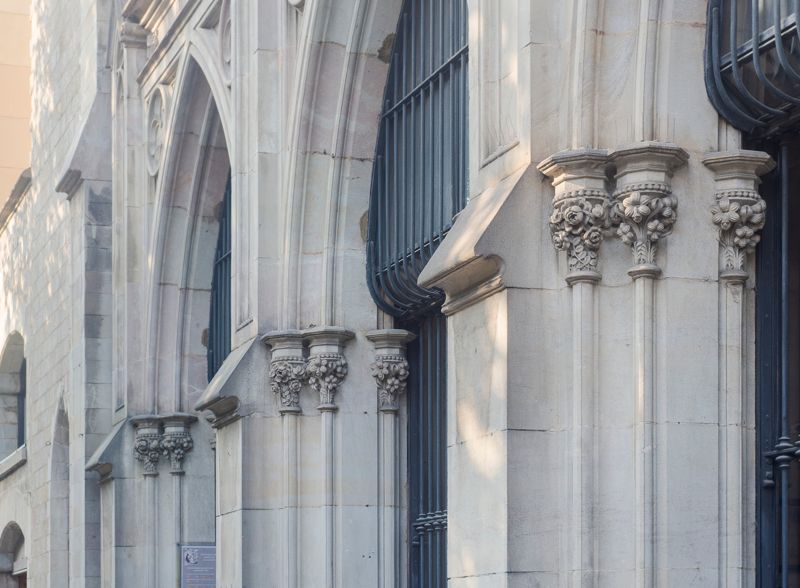
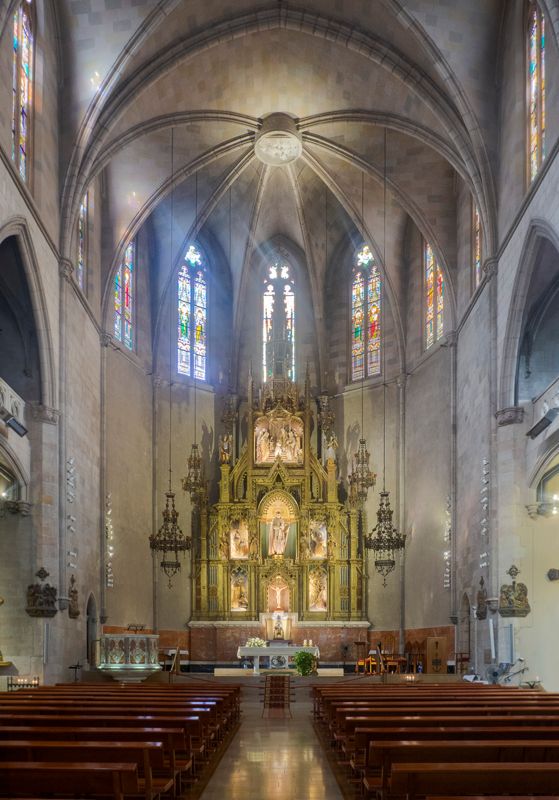
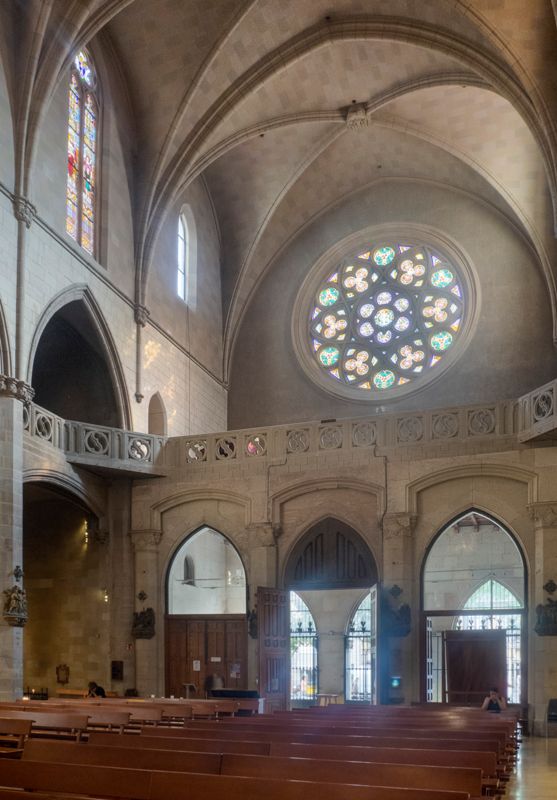
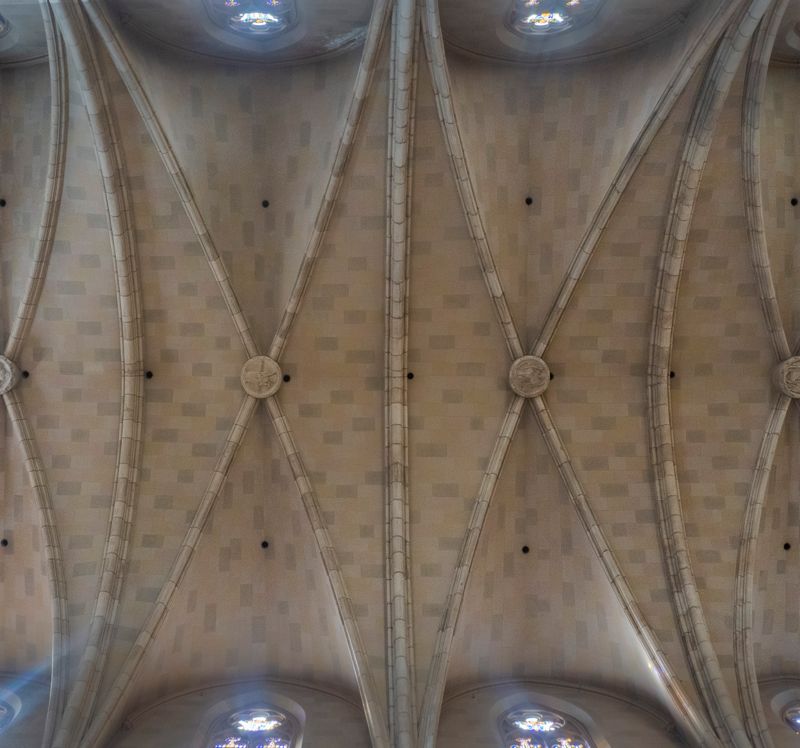
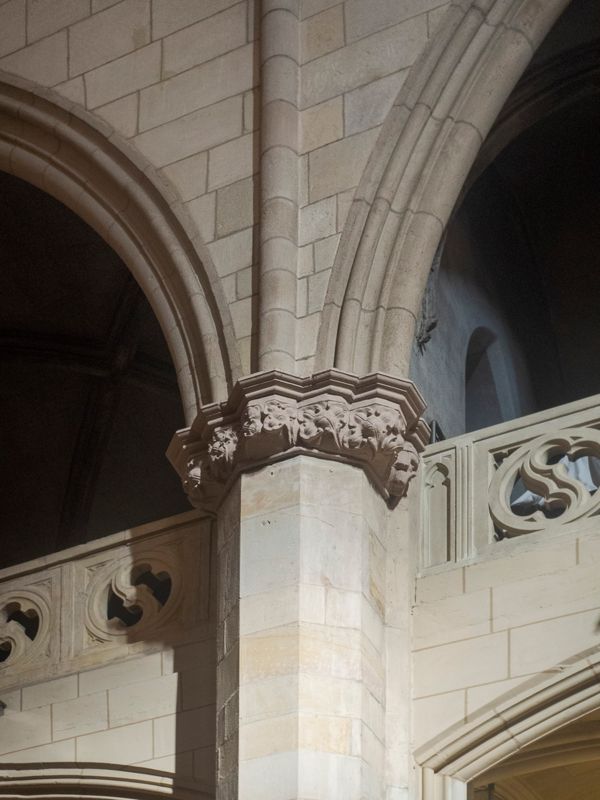
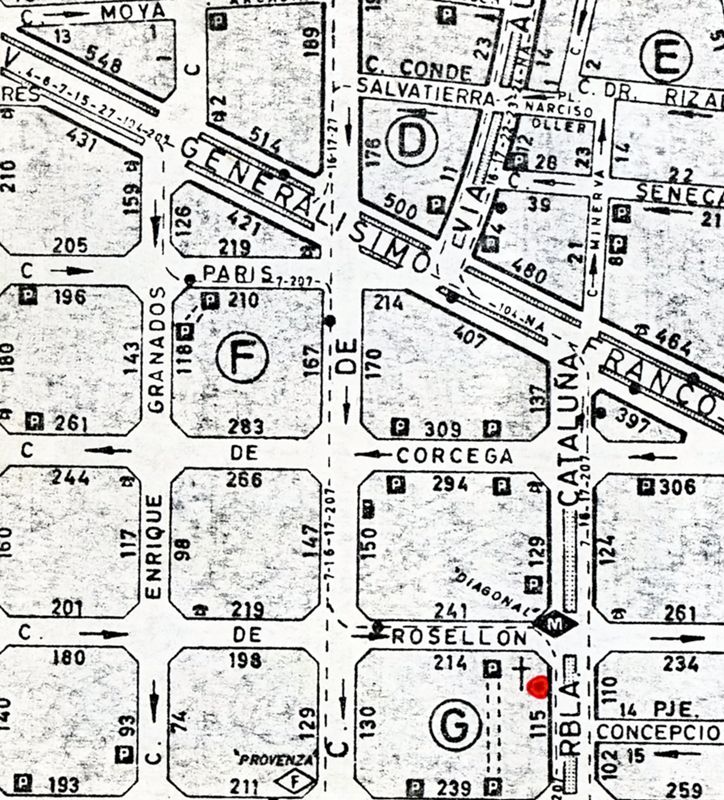
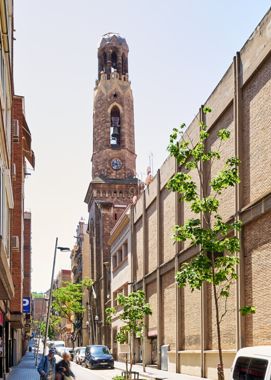
The Dominicans remained there until 1882, when they sold the site and relocated to Rambla de Catalunya. The architect Joan Martorell was commissioned to dismantle and reconstruct the cloister, chapter house, and church at the new location. In doing so, however, he adapted elements of the original building with a certain interpretative arbitrariness. Martorell reorganised these spaces according to a new layout that did not faithfully reproduce the original Montsió complex. In general terms, the interior structure of the church was preserved, although the height of the vault was increased, fifteen new pointed windows were introduced, and the sculptural decoration of the capitals and gallery balustrades was remade. Martorell also devised the stepped form of the buttresses and the bell gable, while providing the principal façade with an entirely new portico.
Included within the works of relocation was the monastery’s Gothic crypt, intended to house a sculptural group representing the Holy Sepulchre. The crypt was decorated with corbels depicting angels holding the Instruments of the Passion and a central keystone illustrating Calvary. The substantial volume of this crypt explains the unusually elevated position of the presbytery, which required a double staircase of fifteen steps to bridge the difference in level with the nave.
The Gothic cloister stood on the northern side of the site and was likewise partially transferred from the former Convent of Montsió, though without preserving its original configuration. It consisted of a rectangular plan arranged over two levels, with galleries of pointed almond-shaped arches resting on columns of Girona nummulitic stone. On the ground floor, these columns were lobed, with abaci carved with floral and heraldic motifs, while the upper gallery featured circular-section columns.
Following the damage sustained during the Spanish Civil War, between 1945 and 1949 the crypt was removed and the level of the presbytery lowered. The conventual buildings, including the chapter house, were also demolished. In 1950, the cloister was relocated once more, this time to Mas Colomer, a manor house in Esplugues de Llobregat that, following its purchase in 1947, had been designated as the new residence of the Dominican community.
The transfer of the community to Esplugues transformed the convent church into a parish church and led to the sale of the chamfered corner site — formerly occupied by the chapter house and cloister — to Banc de Sabadell, which constructed its offices there during the 1970s.