In this first stage, the catalogue focuses on the modern and contemporary architecture designed and built between 1832 –year of construction of the first industrial chimney in Barcelona that we establish as the beginning of modernity– until today.
The project is born to make the architecture more accessible both to professionals and to the citizens through a website that is going to be updated and extended. Contemporary works of greater general interest will be incorporated, always with a necessary historical perspective, while gradually adding works from our past, with the ambitious objective of understanding a greater documented period.
The collection feeds from multiple sources, mainly from the generosity of architectural and photographic studios, as well as the large amount of excellent historical and reference editorial projects, such as architectural guides, magazines, monographs and other publications. It also takes into consideration all the reference sources from the various branches and associated entities with the COAC and other collaborating entities related to the architectural and design fields, in its maximum spectrum.
Special mention should be made of the incorporation of vast documentation from the COAC Historical Archive which, thanks to its documental richness, provides a large amount of valuable –and in some cases unpublished– graphic documentation.
The rigour and criteria for selection of the works has been stablished by a Documental Commission, formed by the COAC’s Culture Spokesperson, the director of the COAC Historical Archive, the directors of the COAC Digital Archive, and professionals and other external experts from all the territorial sections that look after to offer a transversal view of the current and past architectural landscape around the territory.
The determination of this project is to become the largest digital collection about Catalan architecture; a key tool of exemplar information and documentation about architecture, which turns into a local and international referent, for the way to explain and show the architectural heritage of a territory.
We kindly invite you to help us improve the dissemination of Catalan architecture through this space. Here you can propose works and provide or amend information on authors, photographers and their work, along with adding comments. The Documentary Commission will analyze all data. Please do only fill in the fields you deem necessary to add or amend the information.
The Arxiu Històric del Col·legi d'Arquitectes de Catalunya is one of the most important documentation centers in Europe, which houses the professional collections of more than 180 architects whose work is fundamental to understanding the history of Catalan architecture. By filling this form, you can request digital copies of the documents for which the Arxiu Històric del Col·legi d'Arquitectes de Catalunya manages the exploitation of the author's rights, as well as those in the public domain. Once the application has been made, the Arxiu Històric del Col·legi d'Arquitectes de Catalunya will send you an approximate budget, which varies in terms of each use and purpose.
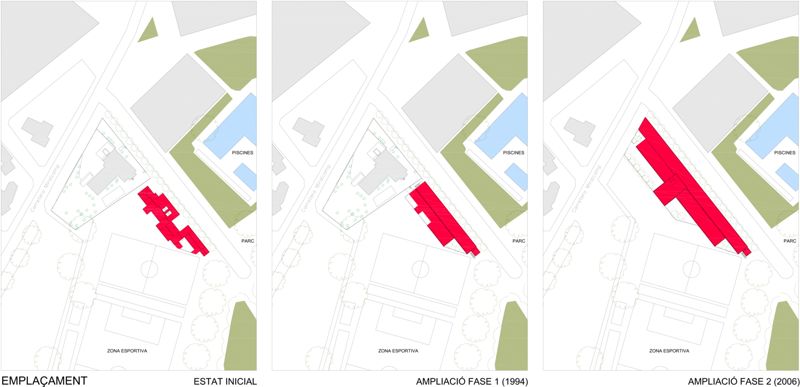
L’actual CAP de Mollerussa és el producte de diverses obres d’ampliació que han anat fent créixer l’edifici des de els anys 70 d’acord amb el ràpid creixement de la població dei la comarca.
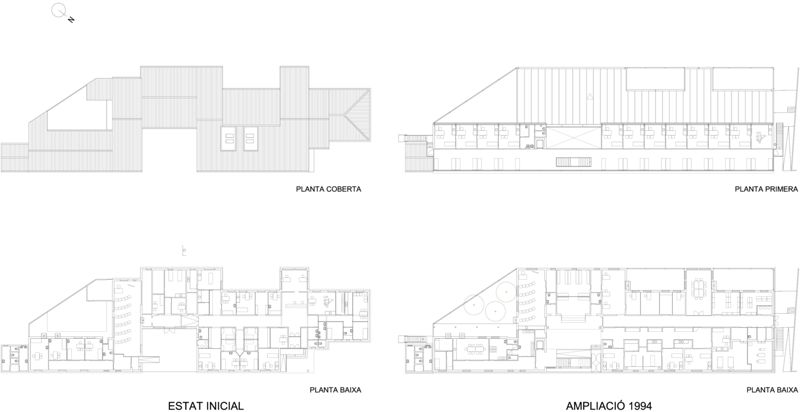
Va començar amb dos petits edificis de planta baixa, l’ambulatori i la casa del metge, units per un garatgesituats en un solar molt petit envoltat d’equipaments (les piscines i el camp de futbol), un parc i una farinera. Una primera ampliació als anys 80 feta pels tècnics municipals va utilitzar el garatge i la vivenda per ampliar el CAP amb àrees d’urgències i administració.
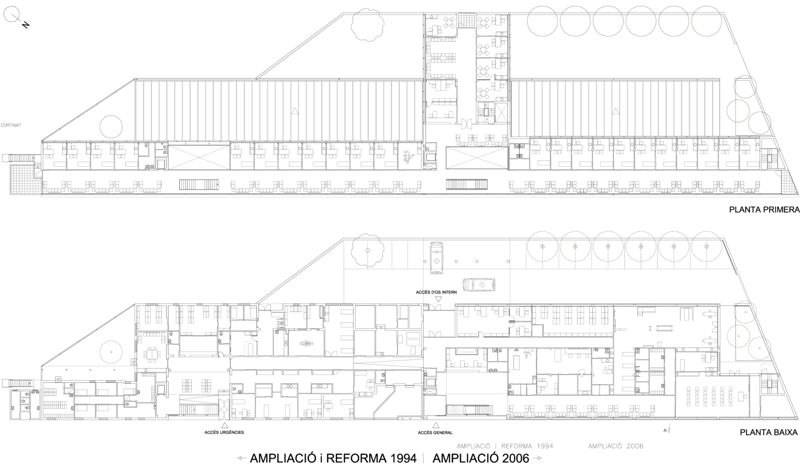
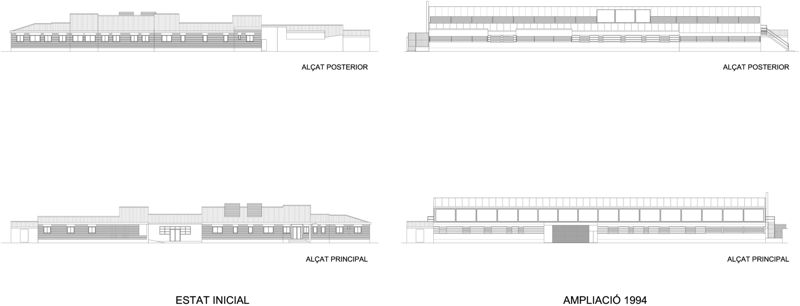
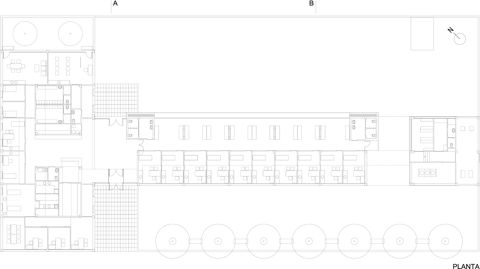
L’any 1994 CatSalut ens va encarregar una ampliació, però no hi havia solar disponible. L’ampliació consisteix en l’addició d’un cos lineal i estret en planta primera i dos cossos en planta baixa, el vestíbul i les noves instal·lacions, que encaixen en la geometria irregular de l’edifici existent. La planta baixa, amb petites reformes, s’adapta al nou programa. L’estructura és metàl·lica recolzada sobre les parets de càrrega de l’edifici existent. El cos lineal de la planta superior conté totes les consultes del CAP amb les àrees d’espera corresponents, que miren cap al parc municipal. La banda de consultes s’interromp quan arriba al vestíbul creant un doble espai que relaciona tots els espais públics de l’edifici. A la planta baixa, des del vestíbul, s’accedeix directament a la resta d’àrees del CAP.
10 anys després va ser necessària una altra ampliació per dotar el centre de serveis especialitzats (rehabilitació, RX, ampliació d’urgències, psiquiatria i consultes d’especialitats). Aquesta vegada si que hi havia solar, fruit de l’enderroc d’una farinera. Aquesta darrera ampliació es planteja amb un edifici igual a l’anterior, amb el mateix cos estret de consultes amb les sales d’espera que miren al parc, la mateixa planta baixa compacta i un altre vestíbul de doble alçada similar al primer on hi ha la nova recepció. A la unió entre els dos edificis, es planteja un cos transversal que conté més consultes a planta primera i les noves instal·lacions a planta coberta. Aquest cos vola sobre la planta baixa formant el porxo d’accés d’ambulàncies, lligat a un vial d’ús restringit que ocupa la part posterior del solar.
L’edifici original era d’obra vista color marró. A la primera ampliació (1994) es va utilitzar maó a la planta baixa i panells metàl·lics per al cos lleuger de la primera planta. Tota l’obra vista vella i nova es va pintar de color blanc per igualar-la. Aquests materials es van mantenir a la segona ampliació (2006) incorporant una gelosia de peces comercials de maó.
L’any 2004 s’ha portat a terme una important ampliació del CAP , en la que no hem intervingut