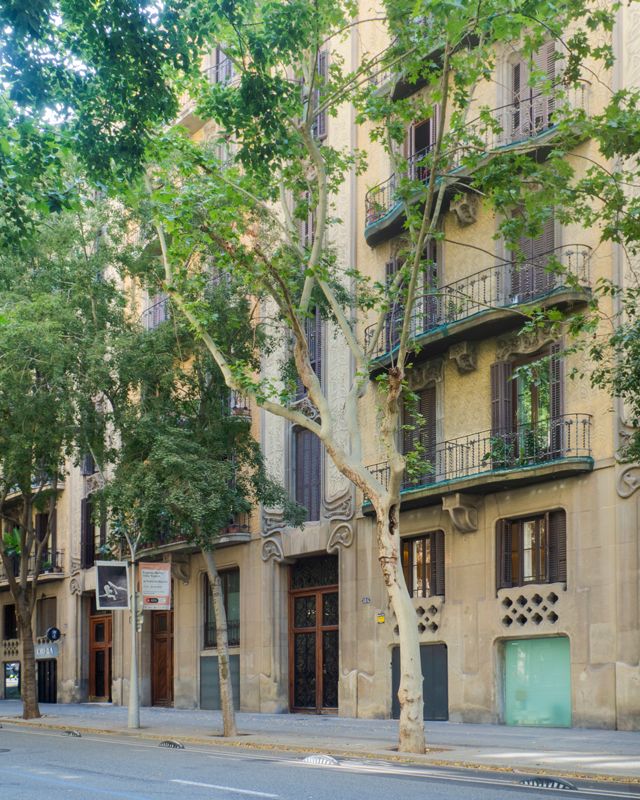
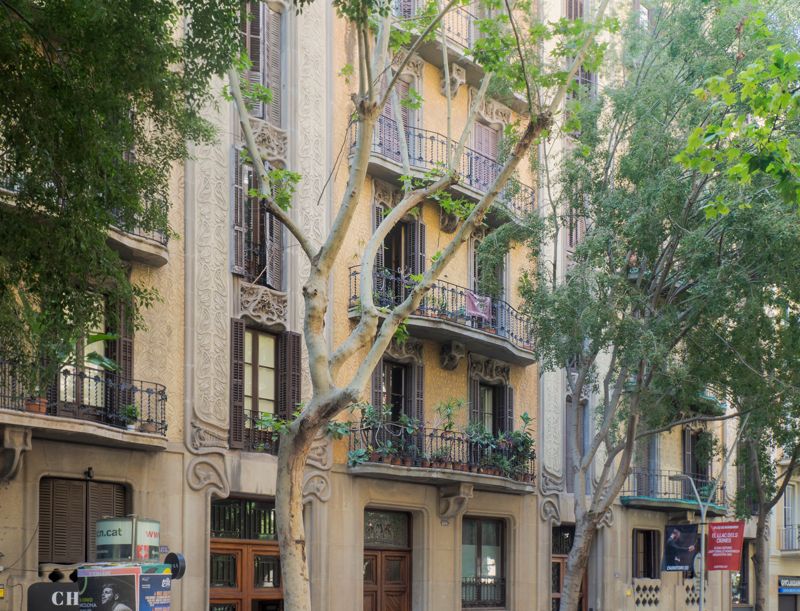
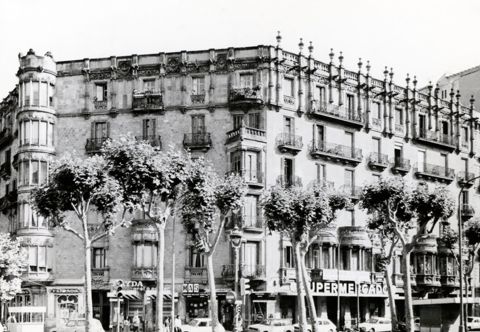
Between 1901 and 1903, the three identical houses on Carrer Mallorca (numbers 184–188) were built, designed by the architect Jeroni Francesc Granell i Manresa (1867–1931). According to some sources (El Quadrat d’Or), Granell may have acted as promoter, architect and probably also the builder of these houses.
Among the preserved documentation relating to the construction of the properties, the completion date of number 184 is recorded as January 1903. Likewise, there is chronological evidence for certain works in the other two houses, such as documents referring to the stained glass of numbers 186 and 188, which show the date 1902.
It is also known that Granell —a master of mosaic and stained glass— had among his collaborators Rigalt. A particularly notable feature of his architectural work is the refined language, in which simplification and elegance of form prevail.
The buildings were constructed on a very regular plot, allowing for properties with a highly regular rectangular plan and a unified façade. The houses consist of seven levels: ground floor, mezzanine, main floor, and four additional floors, topped with a flat, accessible roof.
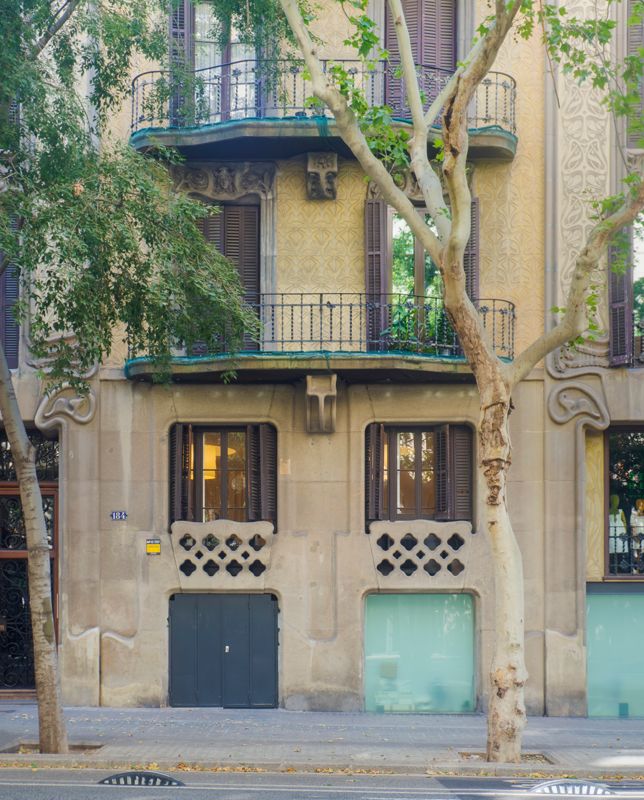
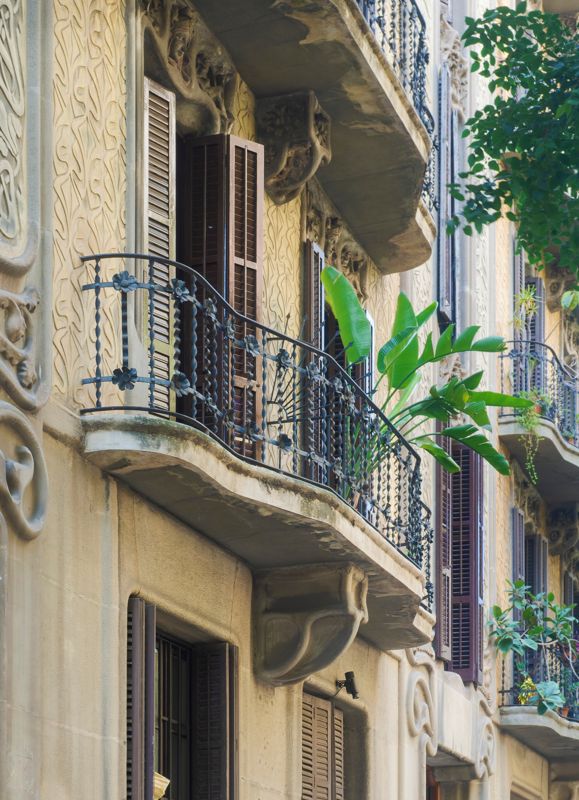
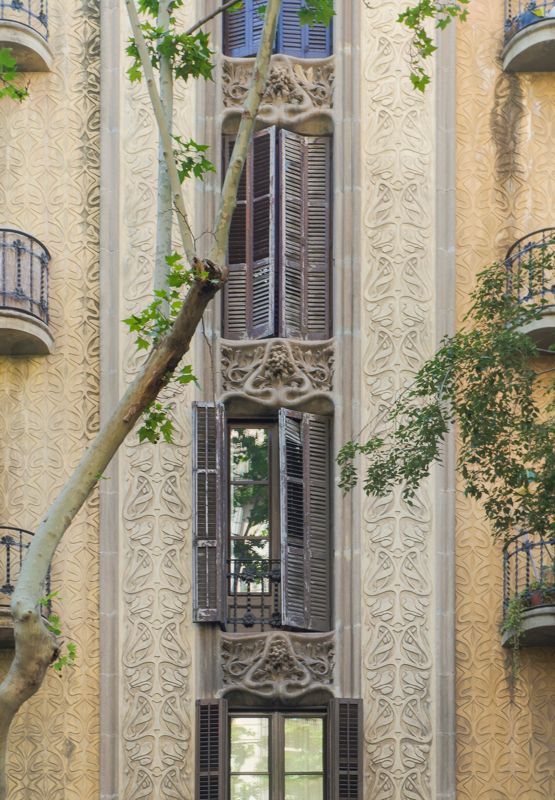
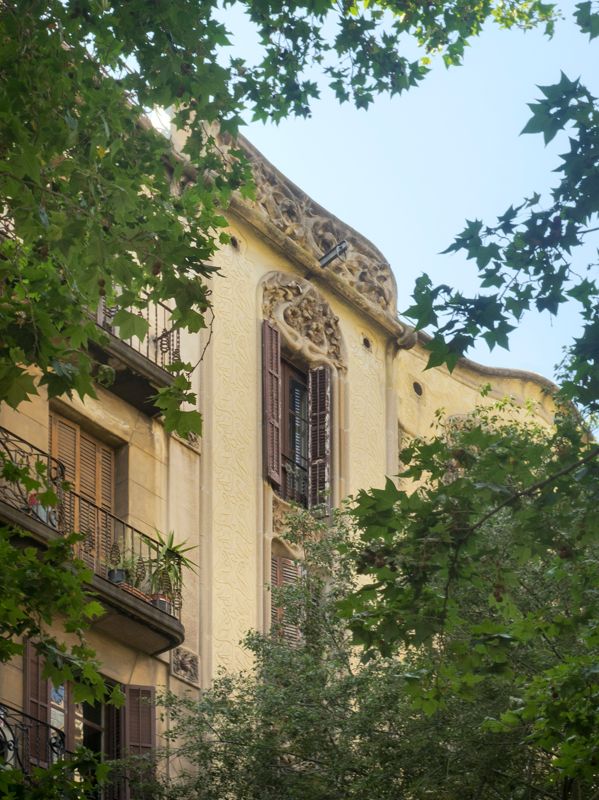
As mentioned above, although this construction comprises three houses, it presents a unified façade while still allowing each property to be distinguished. This is achieved through the alternation of narrow sections defined by a continuous axis of windows with wider sections featuring double balconies. A particularly striking feature of this façade is the high quality of decorative elements and finishes on the lintels and cornices, which are adorned with curvilinear reliefs in a modernist style. The lintels of the windows opening onto the balconies are decorated with vegetal motifs and human faces, which contrast with the simplicity of the curved balcony slab. Meanwhile, the windows of the narrower side sections feature decoration composed of vegetal elements and moulded frames of a more purist line. The wall is fully clad and decorated with light-toned sgraffito depicting intertwined vegetal motifs.
At the top of the building, the architect employed elements of great structural simplicity but striking visual effectiveness. The central, wider sections are capped with an undulating cornice without decoration, while the narrower sections are finished with a straight stone cornice featuring interlaced vegetal motifs, following the models used in the window decoration and sgraffito.
The entrance door to each house is offset from the façade’s axis of symmetry, opening onto one of the lateral sections. This allows the central section to accommodate two low doors with two windows directly above the corresponding lintel at mezzanine level. The reduced height of these doors is possible because the ground floor, intended for commercial use, is set slightly lower than the street level.
Through the entrance door to the property, one reaches the vestibule, which functions as a passageway and provides access to the residents’ staircase. It is a space of two sections, covered with a moulded white plaster ceiling with chamfered edges. The walls are decorated in the lower part with a glazed ceramic dado featuring floral motifs in green and orange. Above this element, the pale-toned wall is decorated as a frame, with lines ending in floral motifs at the corners.
Some elements of the original architectural design are preserved in the property, such as the light wells. Additionally, the high quality and decorative beauty of the windows of the light well adjacent to the staircase should be noted, as they provide both light and ventilation to the interior rooms on the various floors.