Intro

About

In this first stage, the catalogue focuses on the modern and contemporary architecture designed and built between 1832 –year of construction of the first industrial chimney in Barcelona that we establish as the beginning of modernity– until today.

The project is born to make the architecture more accessible both to professionals and to the citizens through a website that is going to be updated and extended. Contemporary works of greater general interest will be incorporated, always with a necessary historical perspective, while gradually adding works from our past, with the ambitious objective of understanding a greater documented period.

The collection feeds from multiple sources, mainly from the generosity of architectural and photographic studios, as well as the large amount of excellent historical and reference editorial projects, such as architectural guides, magazines, monographs and other publications. It also takes into consideration all the reference sources from the various branches and associated entities with the COAC and other collaborating entities related to the architectural and design fields, in its maximum spectrum.

Special mention should be made of the incorporation of vast documentation from the COAC Historical Archive which, thanks to its documental richness, provides a large amount of valuable –and in some cases unpublished– graphic documentation.

The rigour and criteria for selection of the works has been stablished by a Documental Commission, formed by the COAC’s Culture Spokesperson, the director of the COAC Historical Archive, the directors of the COAC Digital Archive, and professionals and other external experts from all the territorial sections that look after to offer a transversal view of the current and past architectural landscape around the territory.

The determination of this project is to become the largest digital collection about Catalan architecture; a key tool of exemplar information and documentation about architecture, which turns into a local and international referent, for the way to explain and show the architectural heritage of a territory.

Aureli Mora i Omar Ornaque
Directors arquitecturacatalana.cat

credits

About us

Project by:

Created by:

Directors:

2019-2026 Aureli Mora i Omar Ornaque

Documental Commission:

2019-2026 Ramon Faura Carolina B. Garcia Eduard Callís Francesc Rafat Pau Albert Antoni López Daufí Joan Falgueras Mercè Bosch Jaume Farreny Anton Pàmies Juan Manuel Zaguirre Josep Ferrando Gemma Ferré Inés de Rivera Fernando Marzá Moisés Puente Aureli Mora Omar Ornaque

Collaborators:

2019-2026 Lluis Andreu Sergi Ballester Marianela Pla Maria Jesús Quintero Lucía M. Villodres Montse Viu

External Collaborators:

2019-2026 Helena Cepeda Inès Martinel

With the support of:

Generalitat de Catalunya. Departament de Cultura

Collaborating Entities:

ArquinFAD


Fundació Mies van der Rohe


Fundación DOCOMOMO Ibérico


Basílica de la Sagrada Família


Museu del Disseny de Barcelona


Fomento


AMB


EINA Centre Universitari de Disseny i Art de Barcelona


IEFC


Fundació Domènench Montaner.


ETSAB

Design & Development:

edittio Nubilum
Suggestions

Suggestion box

Request the image

We kindly invite you to help us improve the dissemination of Catalan architecture through this space. Here you can propose works and provide or amend information on authors, photographers and their work, along with adding comments. The Documentary Commission will analyze all data. Please do only fill in the fields you deem necessary to add or amend the information.

The Arxiu Històric del Col·legi d'Arquitectes de Catalunya is one of the most important documentation centers in Europe, which houses the professional collections of more than 180 architects whose work is fundamental to understanding the history of Catalan architecture. By filling this form, you can request digital copies of the documents for which the Arxiu Històric del Col·legi d'Arquitectes de Catalunya manages the exploitation of the author's rights, as well as those in the public domain. Once the application has been made, the Arxiu Històric del Col·legi d'Arquitectes de Catalunya will send you an approximate budget, which varies in terms of each use and purpose.

Detail:

* If the memory has known authorship or rights, cite them in the field above 'Comments' .

Remove * If the photographs has known authorship or rights, cite them in the field above 'Comments'.
You can attach up to 5 files of up to 10 MB each.

Informació bàsica de protecció de dades

Responsable del tractament: Col·legi d Arquitectes de Catalunya 'COAC'
Finalitat del tractament: Tramitar la sol·licitud de còpies digitals dels documents dels quals l’Arxiu Històric del COAC gestiona els drets d'explotació dels autors, a més d'aquells que es trobin en domini públic.
Legitimació del tractament: El seu consentiment per tractar les seves dades personals.
Destinatari de cessions o transferències: El COAC no realitza cessions o transferències internacionals de dades personals.
Drets de les persones interessades: Accedir, rectificar i suprimir les seves dades, així com, l’exercici d’altres drets conforme a l’establert a la informació addicional.
Informació addicional: Pot consultar la informació addicional i detallada sobre protecció de dades en aquest enllaç

How to get there

In Pictures
View all images
  • Triumphal Arch

  • Triumphal Arch

  • Triumphal Arch

  • Triumphal Arch

  • Triumphal Arch

  • Triumphal Arch

  • Triumphal Arch

  • Triumphal Arch

  • Triumphal Arch

  • Triumphal Arch

  • Triumphal Arch

  • Triumphal Arch

  • Triumphal Arch

  • Triumphal Arch

  • Triumphal Arch

  • Triumphal Arch

  • Triumphal Arch

  • Triumphal Arch

  • Triumphal Arch

  • Triumphal Arch

  • Triumphal Arch

  • Triumphal Arch

  • Triumphal Arch

  • Triumphal Arch

  • Triumphal Arch

  • Triumphal Arch

Memory

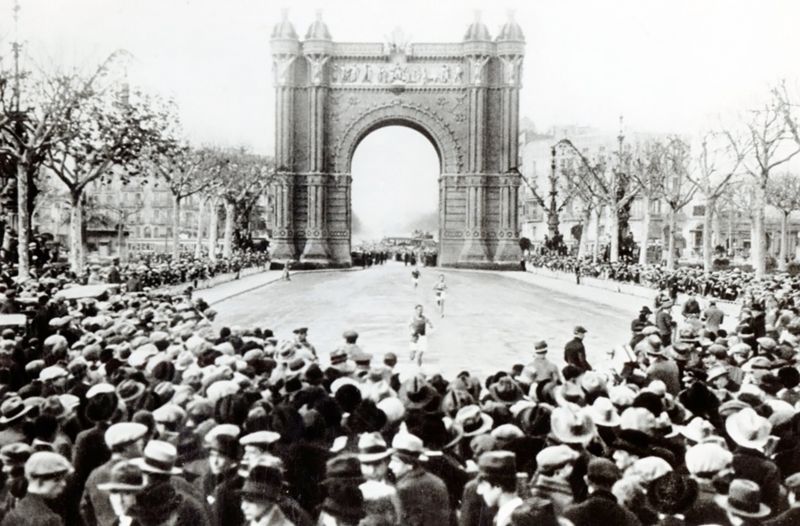
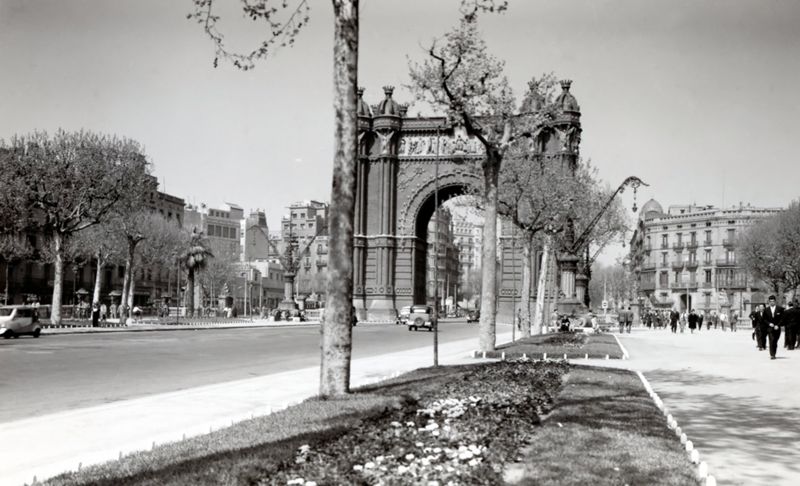
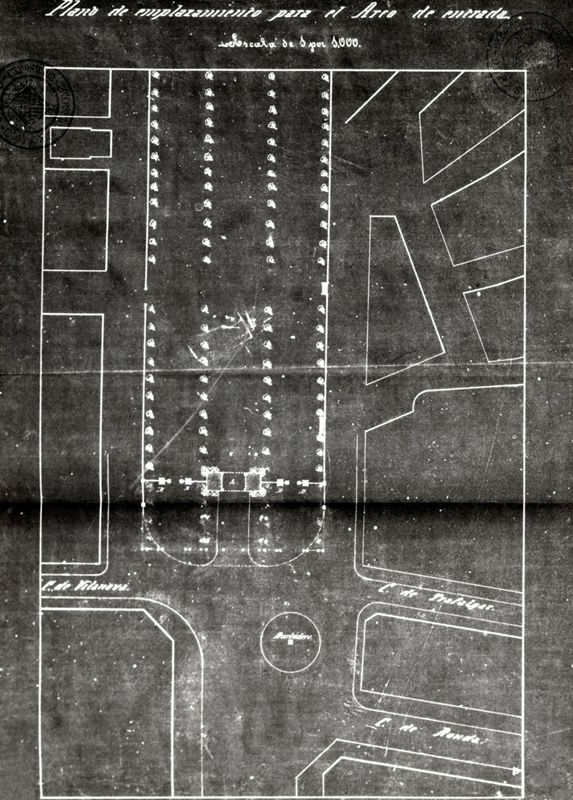
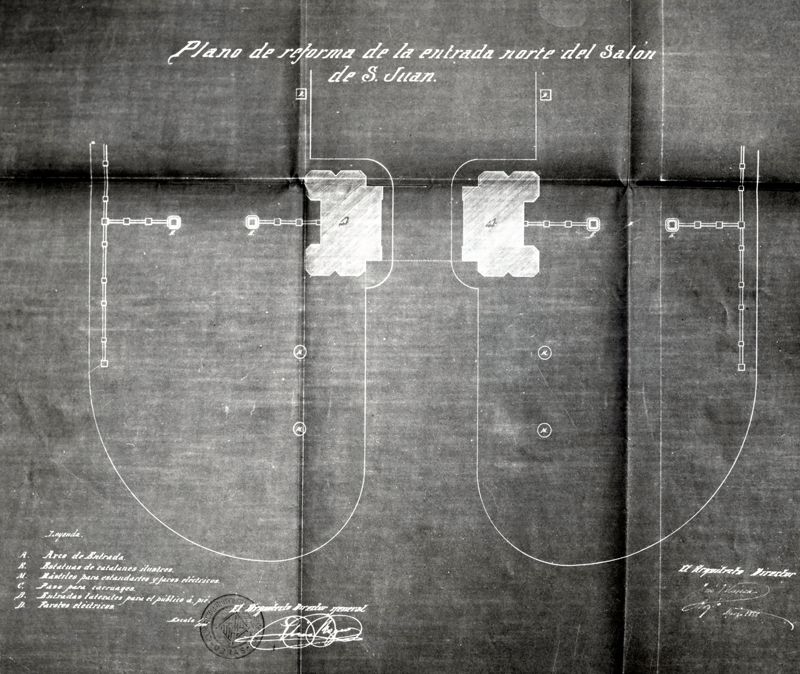
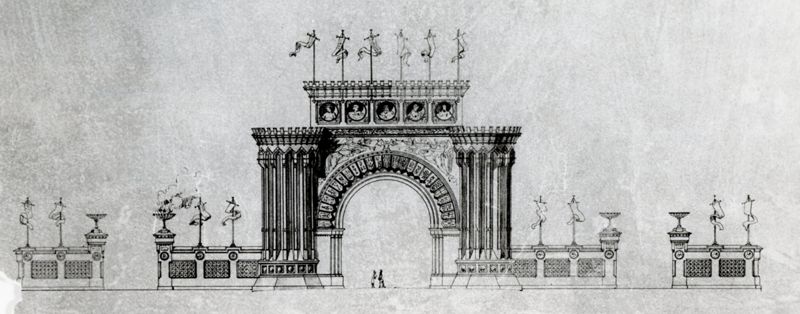
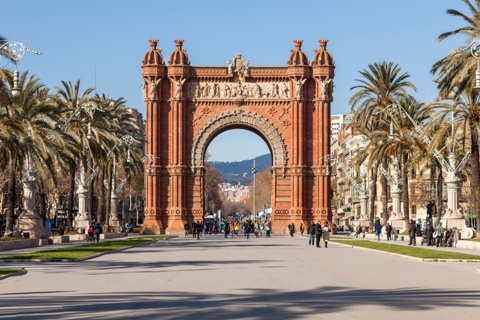
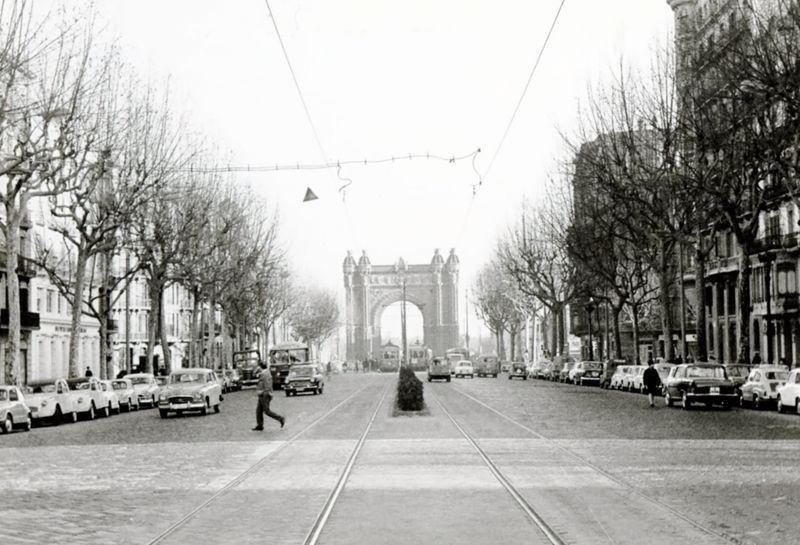
Situated on the boundary of the Ciutat Vella district, the Arc de Triomf is a free-standing structure that presides over the Passeig de Lluís Companys at its junction with Carrer de Trafalgar and Avinguda de Vilanova.
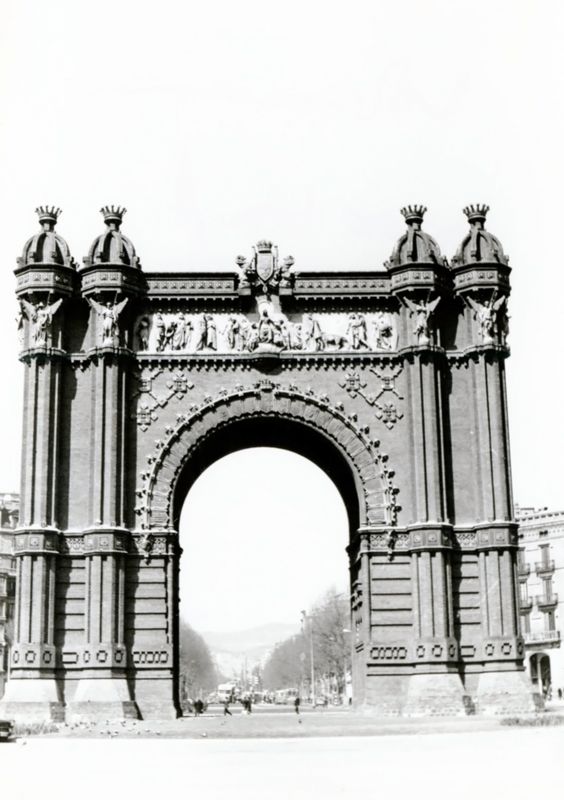
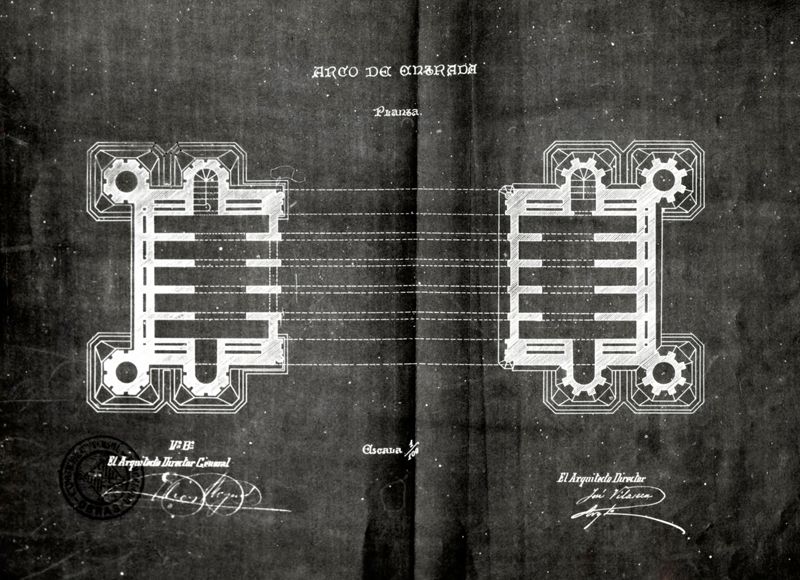
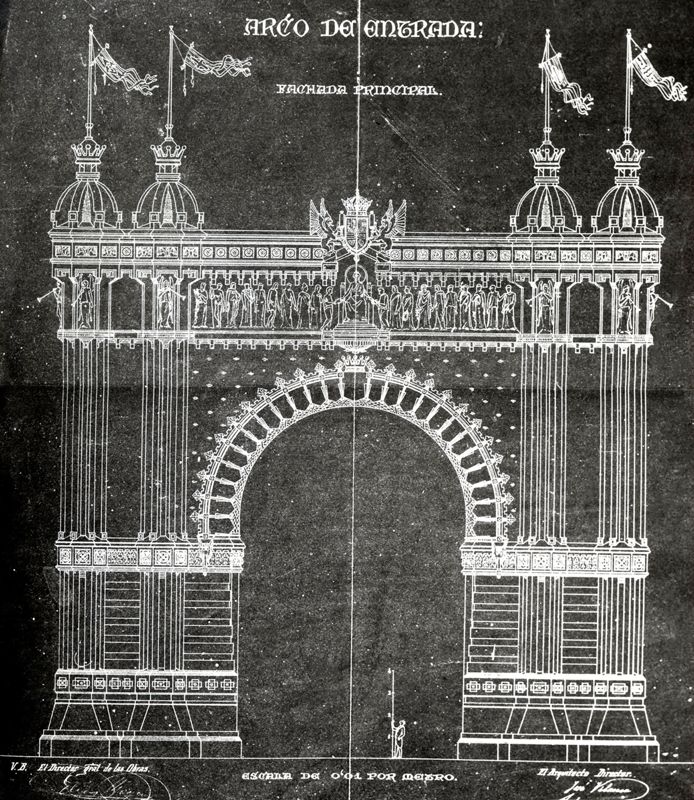
It is a construction of simple design, consisting solely of a large monumental arch flanked on either side by two pairs of giant semi-columns. The walls defining the intrados of the arch contain, on both sides, access points to the interior of its piers. As these piers are not solid, the interior space is articulated by a series of partitions and arches that support the structure. In addition, within these spaces rise the two spiral staircases that provide access to the roof terrace above, concealed inside the semi-columns flanking the arch. Access to the terrace is gained through two crown-shaped openings which serve as models for the other six ornamental cupolas that complete the structure.
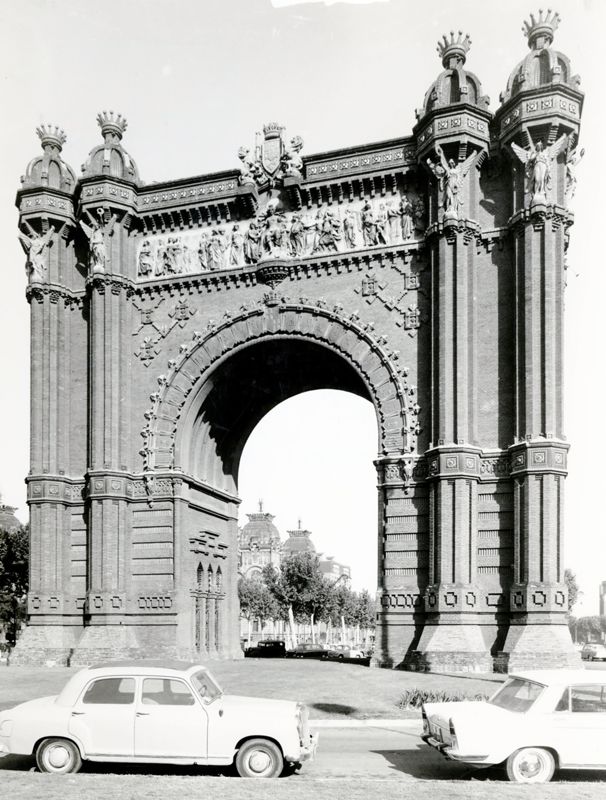
The principal feature of the triumphal arch is its material configuration, based on the use of exposed brick ornamented with glazed ceramics and with certain stone detailing. Indeed, although the foundations and plinth were constructed using large blocks of Montjuïc stone, the visible structure of the building is fundamentally ceramic, making its construction easier and more economical. Furthermore, the formal composition of the building constitutes a catalogue of the ornamental resources of late Eclecticism moving towards early Catalan Art Nouveau, although some authors have sought to identify similarities with Neo-Mudéjar architecture, which was practically non-existent in Catalonia.
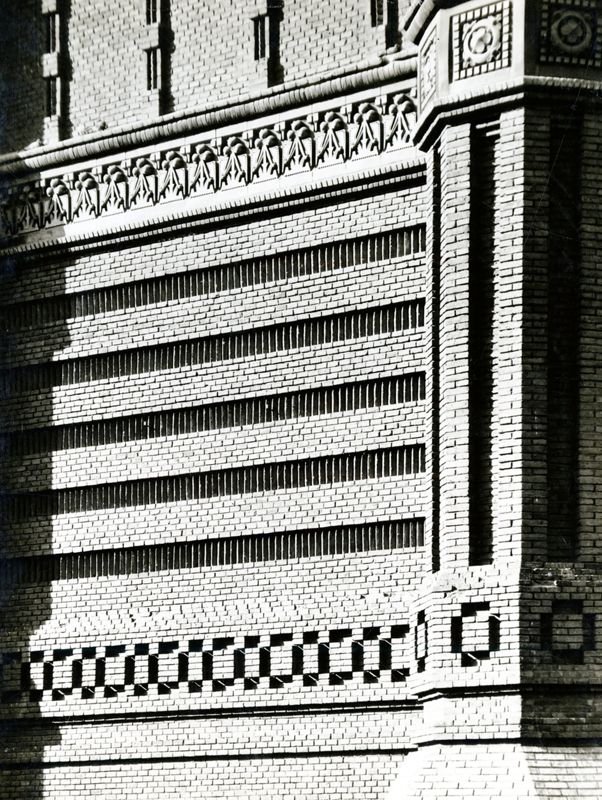
As for the ornamentation, this is based on the interplay of volumes created by projections and recesses according to the arrangement of the bricks. The monument’s plinth stands out for the wedge-shaped bases of the semi-columns, as well as for the arrangement of horizontal bands of yellow and red brick. This plinth is crowned by a continuous frieze of yellow and green glazed ceramics decorated with vegetal motifs. Within this plinth, in the intrados of the arch, are the two entrances to the interior of the building, formed by triple doorways closed with wrought-iron grilles bearing the four bars and the Cross of Saint George.
The imposts of the arch are ornamented with floral stone capitals and reliefs in the form of bats (an emblem attributed to James I the Conqueror). Although the vault of the arch is made of brick, the façades display, through sculpted stone voussoirs, a large laurel wreath supporting the coats of arms of the 49 provinces that formed the Kingdom of Spain in 1888. The keystone of both arches features the city’s coat of arms. The spandrels of the arch display decorations in earth-coloured glazed ceramics and reliefs fashioned in brick.
The crowning of the building is its most interesting part. Above a frieze of corbels running around the four façades rest four sculptural stone friezes. The frieze on the mountain side, entitled “Barcelona Receives the Nations”, was sculpted by Josep Reynés i Gurguí and depicts Barcelona as a crowned and enthroned lady extending her arms to either side, surrounded by other female figures representing Spain, the French Republic, the Austro-Hungarian Empire and the British Empire, among others. The frieze on the sea side, entitled “Reward”, was an early work by Josep Llimona i Bruguera and, in a more restrained language, shows Barcelona awarding prizes to participants in the Exhibition, among whom Spain, with her lion, and France, with the Phrygian cap, stand out. The frieze on the Besòs side, created by Torquat Tasso i Nadal, is entitled “Apotheosis of the Arts and Sciences” and depicts the god Apollo surrounded by male and female allegories of architecture, sculpture, literature, painting, music and geography, among others. The frieze on the Llobregat side, created by Antoni Vilanova i March, is entitled “Apotheosis of Agriculture, Industry and Commerce” and depicts a Victory receiving homage from various figures bringing fruits and gears as attributes of agriculture and industry, under the gaze of Hermes, representing commerce.
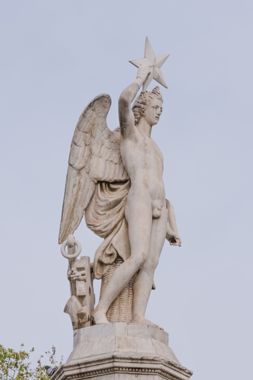
Each of these friezes is flanked by the capitals of the semi-columns surrounding the monument. These abstract brick capitals are adorned with stone sculptures executed by Manuel Fuxà Leal and Pere Carbonell i Huguet. They represent twelve winged Victories or Fames who, resting their feet upon spheres, raise their arms bearing wreaths of flowers and laurel and cast-iron trumpets. The building is finished with a cornice composed of brick corbels and panels of yellow glazed ceramics in the shape of stars. At the centre of the two principal façades (mountain and sea), this frieze is interrupted by the presence of the full coat of arms of Alfons XIII flanked by two lions.
Crowning the building, eight brick cupolas clad in yellow and green ceramics (two of which function as openings) adorn the roof terrace, all surmounted by immense comital crowns made of earth-coloured glazed ceramics.

Source: Inventari del Patrimoni Arquitectònic de Catalunya (IPAC)

Authors

How to get there

On the Map

Awarded
Cataloged
Disappeared
All works

Constellation

Chronology

  1. Triumphal Arch

    Josep Vilaseca i Casanovas

    Triumphal Arch

    Situated on the boundary of the Ciutat Vella district, the Arc de Triomf is a free-standing structure that presides over the Passeig de Lluís Companys at its junction with Carrer de Trafalgar and Avinguda de Vilanova. It is a construction of simple design, consisting solely of a large monumental arch flanked on either side by two pairs of giant semi-columns. The walls defining the intrados of the arch contain, on both sides, access points to the interior of its piers. As these piers are not solid, the interior space is articulated by a series of partitions and arches that support the structure. In addition, within these spaces rise the two spiral staircases that provide access to the roof terrace above, concealed inside the semi-columns flanking the arch. Access to the terrace is gained through two crown-shaped openings which serve as models for the other six ornamental cupolas that complete the structure. The principal feature of the triumphal arch is its material configuration, based on the use of exposed brick ornamented with glazed ceramics and with certain stone detailing. Indeed, although the foundations and plinth were constructed using large blocks of Montjuïc stone, the visible structure of the building is fundamentally ceramic, making its construction easier and more economical. Furthermore, the formal composition of the building constitutes a catalogue of the ornamental resources of late Eclecticism moving towards early Catalan Art Nouveau, although some authors have sought to identify similarities with Neo-Mudéjar architecture, which was practically non-existent in Catalonia. As for the ornamentation, this is based on the interplay of volumes created by projections and recesses according to the arrangement of the bricks. The monument’s plinth stands out for the wedge-shaped bases of the semi-columns, as well as for the arrangement of horizontal bands of yellow and red brick. This plinth is crowned by a continuous frieze of yellow and green glazed ceramics decorated with vegetal motifs. Within this plinth, in the intrados of the arch, are the two entrances to the interior of the building, formed by triple doorways closed with wrought-iron grilles bearing the four bars and the Cross of Saint George. The imposts of the arch are ornamented with floral stone capitals and reliefs in the form of bats (an emblem attributed to James I the Conqueror). Although the vault of the arch is made of brick, the façades display, through sculpted stone voussoirs, a large laurel wreath supporting the coats of arms of the 49 provinces that formed the Kingdom of Spain in 1888. The keystone of both arches features the city’s coat of arms. The spandrels of the arch display decorations in earth-coloured glazed ceramics and reliefs fashioned in brick. The crowning of the building is its most interesting part. Above a frieze of corbels running around the four façades rest four sculptural stone friezes. The frieze on the mountain side, entitled “Barcelona Receives the Nations”, was sculpted by Josep Reynés i Gurguí and depicts Barcelona as a crowned and enthroned lady extending her arms to either side, surrounded by other female figures representing Spain, the French Republic, the Austro-Hungarian Empire and the British Empire, among others. The frieze on the sea side, entitled “Reward”, was an early work by Josep Llimona i Bruguera and, in a more restrained language, shows Barcelona awarding prizes to participants in the Exhibition, among whom Spain, with her lion, and France, with the Phrygian cap, stand out. The frieze on the Besòs side, created by Torquat Tasso i Nadal, is entitled “Apotheosis of the Arts and Sciences” and depicts the god Apollo surrounded by male and female allegories of architecture, sculpture, literature, painting, music and geography, among others. The frieze on the Llobregat side, created by Antoni Vilanova i March, is entitled “Apotheosis of Agriculture, Industry and Commerce” and depicts a Victory receiving homage from various figures bringing fruits and gears as attributes of agriculture and industry, under the gaze of Hermes, representing commerce. Each of these friezes is flanked by the capitals of the semi-columns surrounding the monument. These abstract brick capitals are adorned with stone sculptures executed by Manuel Fuxà Leal and Pere Carbonell i Huguet. They represent twelve winged Victories or Fames who, resting their feet upon spheres, raise their arms bearing wreaths of flowers and laurel and cast-iron trumpets. The building is finished with a cornice composed of brick corbels and panels of yellow glazed ceramics in the shape of stars. At the centre of the two principal façades (mountain and sea), this frieze is interrupted by the presence of the full coat of arms of Alfons XIII flanked by two lions. Crowning the building, eight brick cupolas clad in yellow and green ceramics (two of which function as openings) adorn the roof terrace, all surmounted by immense comital crowns made of earth-coloured glazed ceramics.

Routes & Notes (2)

Related Works (28)

Set La Ciutadella | Exposició Internacional de 1888

Bústia suggeriments

Ajuda’ns a millorar el web i el seu contingut. Proposa’ns obres, aporta o esmena informació sobre obres, autors i fotògrafs, o comenta’ns el què penses. Participa!